Opinion article
AI has revolutionised the space. From being hand-coded in video games to rewriting your messages to “remove hostility. GenAI is the next step in a long line of steps from the first computer as we automate more complex and dangerous tasks.
Now we see how Chat-GPT, Dalle and Midjourney to name a few. Change how people interact and produce creative works. As I write this, WordPress is asking if I want to use the AI assistant for my writing or if I want to add an AI image as above. Becoming so popular very few technologies have made such a difference over such as small amount of time.
AI has become a force to be reckoned with as every site adds AI to “enhance” it. This has led to a gaggle of branded AI as every company needs its own. Every site and company adds AI to “enhance the user experience”.
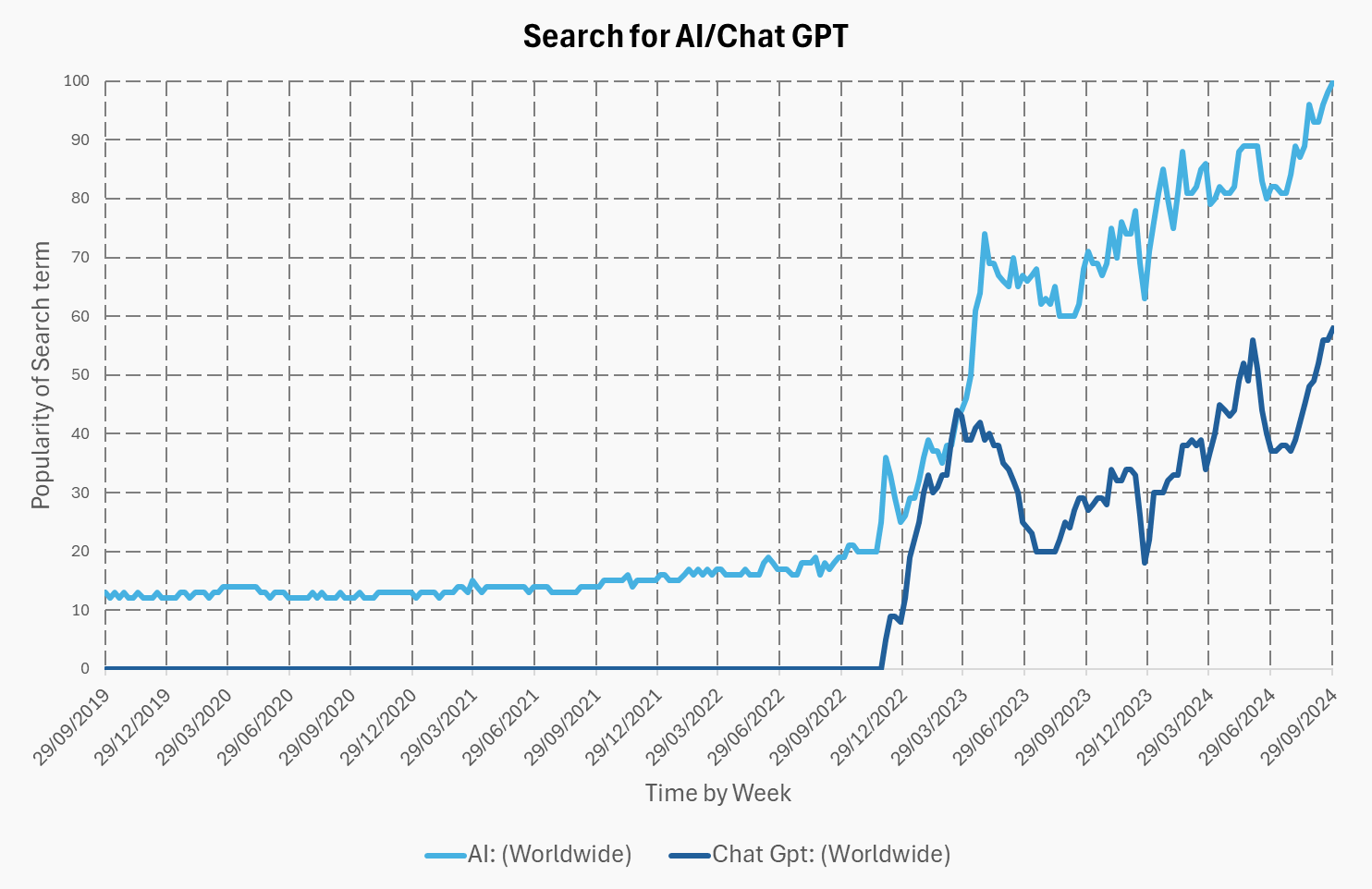
Society has three challenges that it needs to address.
Intellectual Property
Many people have addressed this issue as AI needs data to build upon itself it trawls every website and every piece of data that it can get its hands on. In this process, it doesn’t care who the data belongs. This ends up with AI Art specifically as it grabs artists’ work in the public domain.
This non-discerning data collection is stealing and this has directly lead to a less open web as you need easily usable API’s increase the data scraping used for AI. Where companies are now selling keys specifically for AI to be able to use your work. It is imperative to stop the onslaught of AI taking what isn’t theirs for their gain.
Human Skills
As AI continues to advance, one of the growing concerns is the potential impact on human skills. Automation and AI tools can handle tasks that once required human expertise, from customer service to complex decision-making. While this can increase efficiency, it also risks deskilling the workforce. People may rely more on AI using it as a crutch than the tool it should be used as.
Scams
AI technology has also opened new doors for scams and fraudulent activities. With AI’s ability to generate convincing text, and voice and ever-improving deepfakes. Cybercriminals have more tools than ever before as the more effective AI becomes the greater the danger it poses. AI-driven bots can mimic human interactions, making it harder to detect malicious intent. Furthermore, the rise of AI in financial sectors has made it easier for scammers to exploit automated systems, tricking people or algorithms into making fraudulent transactions. This evolving threat highlights the urgent need for robust cybersecurity measures to counteract AI-driven scams, ensuring that society can reap the benefits of AI without falling victim to its darker side.